 |
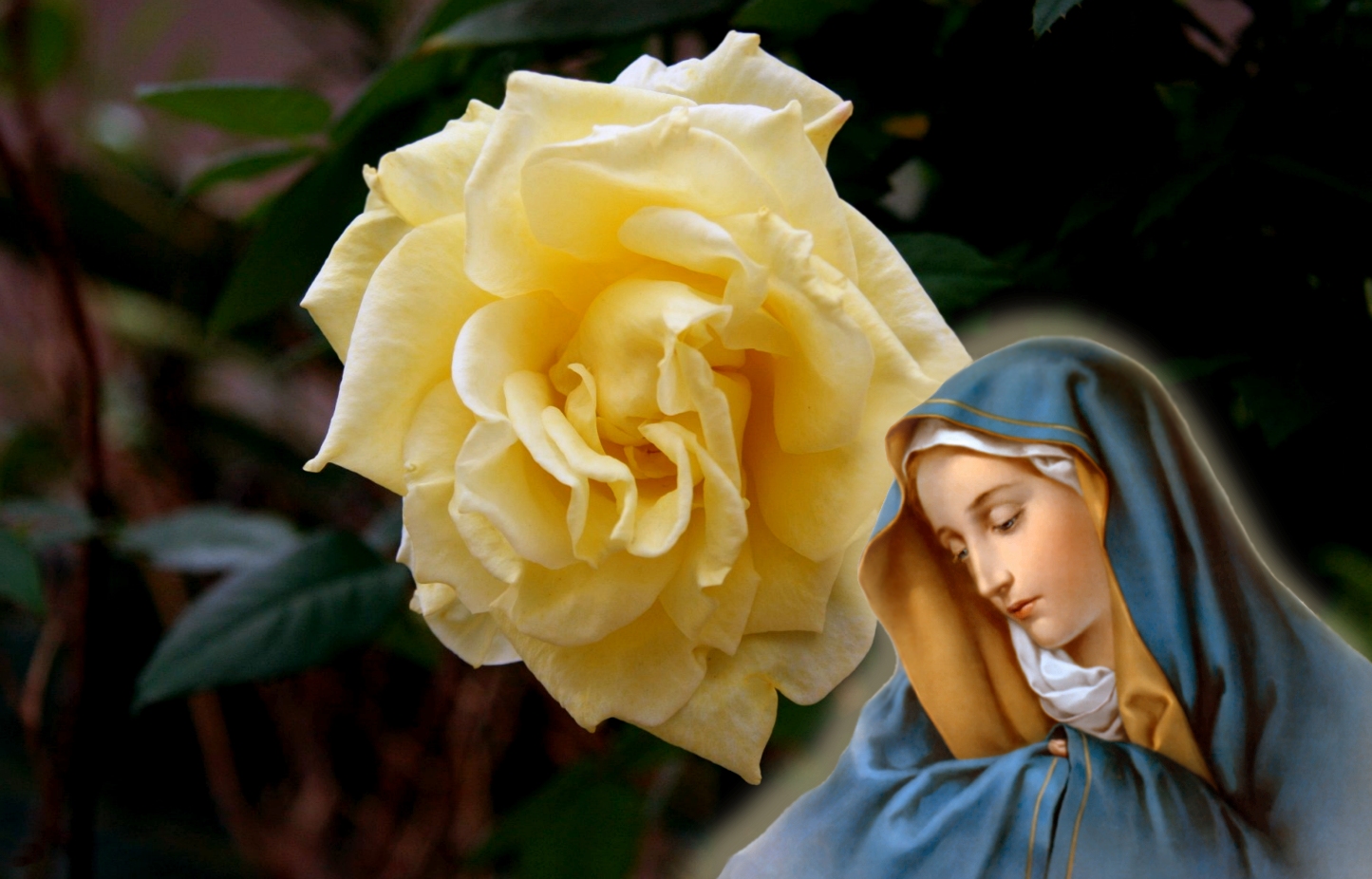
 The Blessings of Mary Taken from A GARLAND FOR OUR LADY Irish Ursulines, 1920 with IMPRIMATUR  Answer to a Child's Prayer During the last battle between Poland and Russia, a Count of noble birth who had taken up arms, was seized and condemned to death. On hearing this dreadful news, his wife hastened with her little son to the chapel, where, kneeling before a picture of our Lady of Sorrows, she prayed a loud, "O Mother of Sorrows pray for us, protect and save us! Give back to a poor, unhappy woman, her husband; to a child and son, his father! Thou must take pity on our tears, thou, who so much lovest thine own Divine Son! O sorrowful Mother, who hast suffered so much, have pity on us!" She remained praying some time with the child, then she left the chapel. It was as if some mysterious consoling inspiration had taken possession of her soul. She went at once with her son, under the protection of a faithful servant, to the prison where her husband was detained. She was able to bribe the guard and jailer by some gold pieces, and then she was taken to the dark cell. An hour later the Countess and her child again passed the guard, the former with her face covered, weeping, the boy also crying bitterly. They did not open the cell again until it was quite dark. Then the Inspector came and examined all closely. He gave a loud cry, and called the guards, saying, "Betrayed! betrayed!" Instead of the Count they found a woman! The Countess had entreated her husband to go away in her place; full of confidence in the assistance of the Mother of Sorrows she had made this resolve, and possessed the courage and strength to carry it out. Her husband was now safe, and on his way to Paris. A year and a half passed by; from day to day the poor Count vainly awaited the return of his wife, hoping in Mary's protection that she would be pardoned; the unhappy man could not even hear what had befallen her. The continually-repeated questions of his child -----"Where was his mother all this long time?"-----only increased the racking pain of his tormented heart. He had placed the boy in a school under religious teachers, and he was growing up in piety, knowledge, and good morals. The time of his First Communion was approaching, but the thought of his mother followed him continually. He said to his father, "She MUST come to my First Communion, and she WILL come!" Quite taken up with this idea, one day he suddenly interrupted his studies, made the Sign of the Cross, and wrote the following letter to the faithful old servant, who had accompanied the Countess to Warsaw, where he was still staying. "Peter, will you please tell my mother, that in four weeks' time I am to have the happiness of making my First Communion, and that she is to return to Paris, and must be present. I am not writing to her, because Papa says they intercept all our letters; but I firmly rely on you using all possible precaution, that this news may reach her, and that you will tell her all I want. "I embrace you, you good, faithful old Peter, with all my heart. Your Stanislaus." The letter being finished, the child put a little picture of our Lady inside, that the missive might bring happiness, sealed it, and took it to the post. Meantime the Count had received a note, in a strange unknown hand containing the following lines: "No more hope -----departure for Siberia decided upon-----Peter will make a last effort but they say that any attempt to escape will be punished with her life." The day of the First Communion was now at hand. Stanislaus had said nothing about his letter, either to his father or teachers, but he talked all the more about it to his loving Lord, Whom he was going to receive. He counted the days and hours, saying to himself, "I will make a Novena to the dear Mother of God, before my First Communion, and will so arrange that it shall finish the very moment I receive absolution after my general Confession; I will pray so earnestly, so long, and so well that the ever blessed Virgin will be compelled to give me back my mother." It was the eve of the Great Day. According to a pious custom, the parents saw their children in the parlor, gave them their blessing; and the little ones could then ask pardon for all their faults and failings. The Count came also. Stanislaus clung around his neck, lovingly kissed him, then asked his pardon, and kneeling down received a blessing. Then he said: "I have your blessing now, but I also hope to receive my mother's." His father remained silent. "Do you not know then, that mamma is coming?" The Count answered by a deep sigh, tears filling his eyes. "She will come, she MUST be present at my First Communion. Listen, dear father. I have made a Novena to the Mother of God, which finishes about five o'clock. At four o'clock I shall be absolved, and then I shall be pure as an Angel; I will beg our Blessed Lady to send my mother this evening, or at least tomorrow. "The Count tried to smile but could not; he left his son, for he could no longer control his feelings. It was five o'clock, and Stanislaus was on his way to the porter, when one of the Religious met him, and said, "Where are you going, my child?" "To see if no one has asked for me?" "Your father was only here this morning" "Yes, but am expecting another visitor -----my mother." "Why, she is not even in Paris!" "But I am quite certain she will come." "No more distractions this evening, my dear boy," answered the Father, "the time for visitors is over, so go to your companions." The Novena was finished, and the child thought that the Queen of Heaven must send his mother immediately, so full of hope was he, and he had prayed with such confidence, and so earnestly. It was a great sacrifice, not to see the porter, but he bore it bravely, ever saying to himself; "When my mother comes, she will ask for me, and then they will send for me." Six o'clock struck, then seven! No one was announced. Supper was over, and all went to the their bedrooms; poor Stanislaus felt discouraged. Just at this time, a woman, care-worn and meanly-clad, her face drawn and disfigured, very miserable-looking and thin, came up to the porter, saying she desired to see the young Count Stanislaus. The Brother did not know what to think of such a late visitor; besides, he mistrusted her, for she looked like a vagabond. So he stoutly refused to announce the visitor; but she did not desist, begging still more earnestly. At last, tried by her persistence he let her go to the window to see the children as they were passing by. Stanislaus, who still counted on his mother's return, could not resist going a little out of the ranks and examined the parlor with a quick glance. The Countess, for she it was, had only time to call out: "There, there!" when a loud cry was heard, and she fell to the ground. She had arrived at the exact time appointed by her child. By a special providence of God, she had been able, in an unguarded moment to escape, on her way to Siberia. Over mountains, through woods, marshes and valleys, she had made the long journey on foot, and at last reached Paris, begging her way as she walked, for she had no other means of help. But whither was she to turn her steps in this great city? Fortunately, Stanislaus, in his letter, had thought of giving his address. She remembered the name of the street, and finally, after many enquiries, arrived at the school, where her child was. The next morning the happy parents, re-united after such a long and painful separation, were present at their son's First Communion. It is certainly wonderful what power an earnest and persevering prayer has with God. But it is not less wonderful how our sorrowful Virgin Mother compassionates her suffering children and helps them.  E-Mail E-Mail HOME-------------------------------MARY'S INDEX www.catholictradition.org/Mary/blessings20.htm |